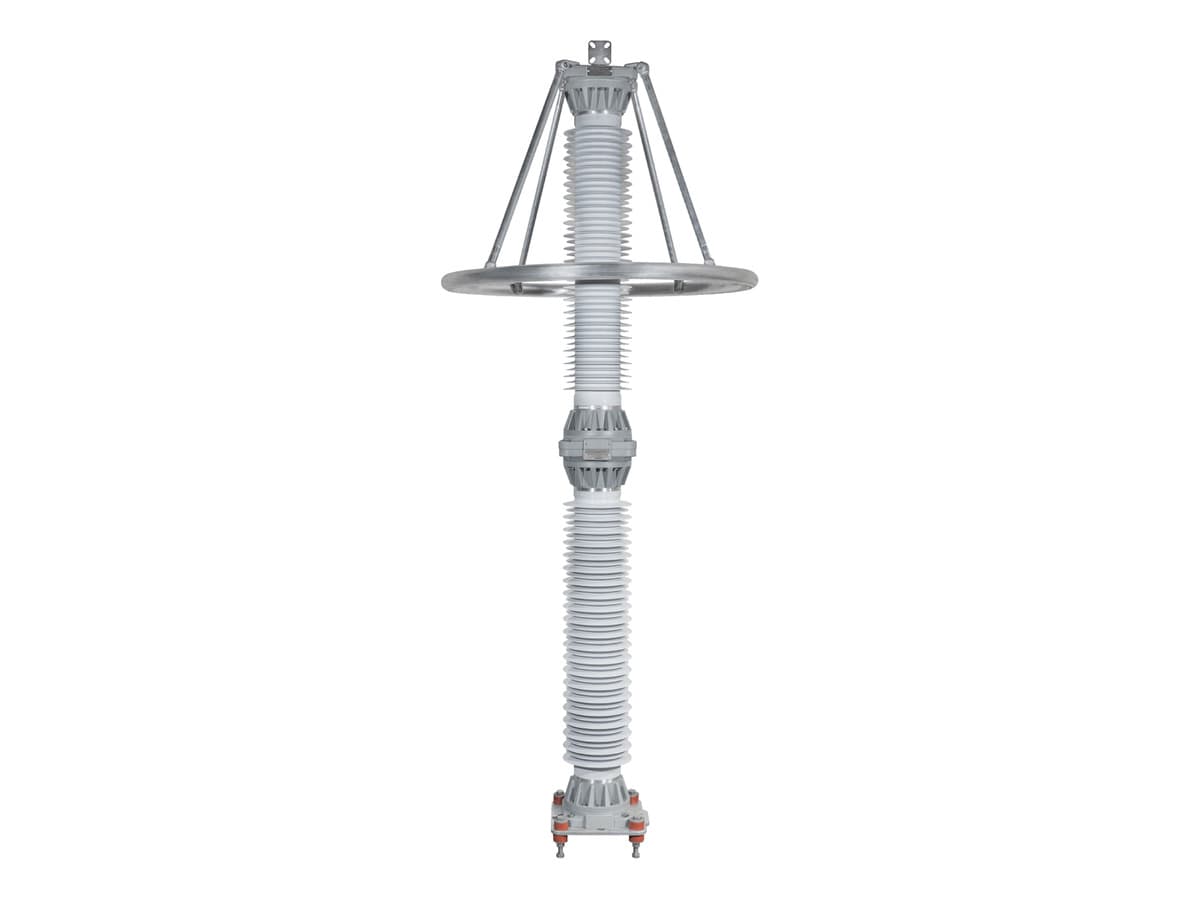
Transformer Bushings/Wall Bushings
Resin-impregnated paper (RIP) and dry-type bushings.
Overview
Transformer bushings and wall bushings carry a live conductor through a grounded barrier, such as a transformer tank cover or a substation wall, without letting the voltage flash over to earth. Raptronics supplies resin-impregnated paper (RIP) and dry-type bushings by Moser-Glaser for transformer, wall and switchgear applications across MV/HV ratings.
A bushing is a small part of a large asset, but it sits at one of the highest electrical stress points in the substation. When one fails, the outage rarely stays limited to the bushing. Choosing the right insulation technology, interface and creepage distance at the specification stage avoids most of the problems that show up years later in service.
Our engineering team works with utilities, transformer OEMs, EPCs and industrial users to match the bushing to the duty: the voltage class, the current, the mounting interface, the site pollution level and the way the asset will be maintained.
Specifications
- Insulation technology
- Resin-impregnated paper (RIP), dry-type
- Applications
- Transformer, wall and switchgear
Types
Transformer bushings
Transformer bushings connect the windings inside an oil-filled tank to the overhead line or busbar outside it. One end sits in transformer oil and the other in air, so the design has to manage two very different dielectric environments at once. RIP bushings handle this with a capacitively graded core that spreads the electric field evenly along the insulation.
Wall bushings
Wall bushings take a conductor through a building wall or a partition between indoor and outdoor equipment. Both ends are normally in air, and one side may face weather and pollution while the other stays clean and dry. Getting the creepage distance right for the outdoor side is a key part of the selection.
Switchgear bushings
In switchgear, bushings form the interface between the switchgear and the cables, busbars or transformers connected to it. Space is usually tight, so a compact dry-type design that can be mounted in any orientation is often an advantage.
RIP bushings are built by winding paper with conductive grading layers around the conductor, then impregnating the core with resin under vacuum and curing it into a solid body. The result is a bushing with no oil inside it, which removes the risk of oil leaks and reduces the fire risk compared with oil-impregnated paper (OIP) designs.
Applications
Power transformers
New transformers built by OEMs, and replacement bushings for transformers already in service, where a failed or ageing bushing needs to be swapped during a planned outage.
Substation wall penetrations
Indoor substations and GIS buildings where conductors must pass from an outdoor yard into a building, or between rooms, through a grounded wall.
Switchgear
MV/HV switchgear where a compact, dry bushing simplifies the layout and removes oil from the equipment room.
Applicable standards
We carry the applicable standards for your voltage class. Please reach out with your inquiries for more details.
Lead time
We offer very competitive lead times. Reach out and share your forecast with us in advance, and we can guarantee your requested lead time is met.
Frequently asked questions
What is the difference between RIP and OIP bushings?
Both use paper as the main insulation. In an OIP bushing the paper is impregnated with oil and sealed inside a housing that is also filled with oil. In a RIP bushing the paper is impregnated with resin and cured into a solid core, so there is no oil inside the bushing. RIP designs remove the risk of oil leaks and can usually be installed at any angle.
Can a RIP bushing replace an existing OIP bushing on a transformer in service?
Often it can, provided the replacement matches the original mounting flange, the length into the tank, the conductor connection and the electrical ratings. Send us the nameplate data and drawings of the existing bushing and our team will check whether a direct replacement is available.
What information do you need to quote a bushing?
The rated voltage, rated current, BIL, the application (transformer, wall or switchgear), the mounting interface, the required creepage distance or site pollution level, and the quantity. Drawings of an existing bushing are very helpful for replacements.
Who manufactures the bushings you supply?
The transformer and wall bushings we supply are made by Moser-Glaser. Raptronics acts as the manufacturers' representative, handling technical selection, quotation and support.
Trusted in production by








Related products
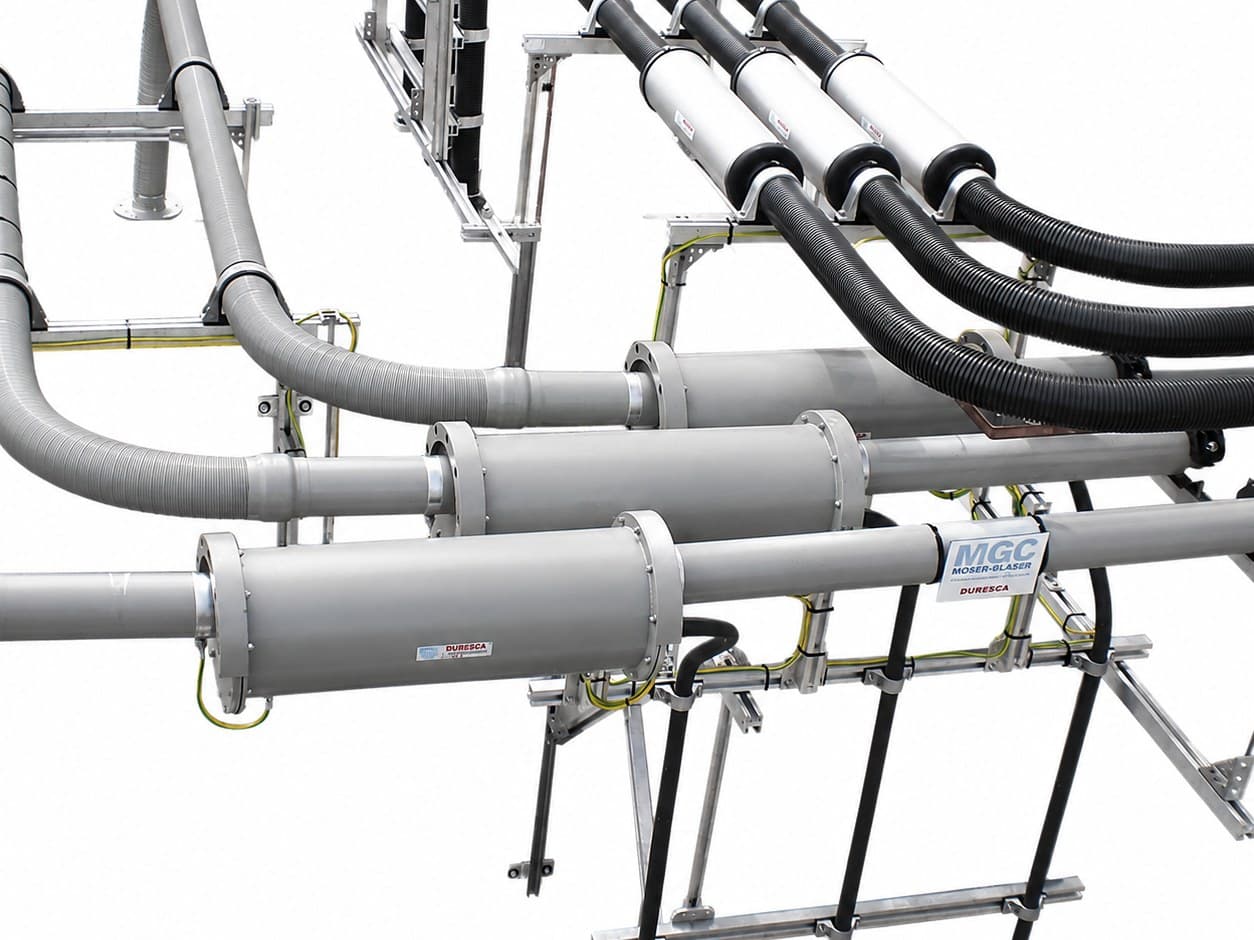
Browse all MV/HV Equipment- DURESCA® Insulated Busbar SystemsDry-type, fully insulated busbar systems for high-current MV/HV connections.View details
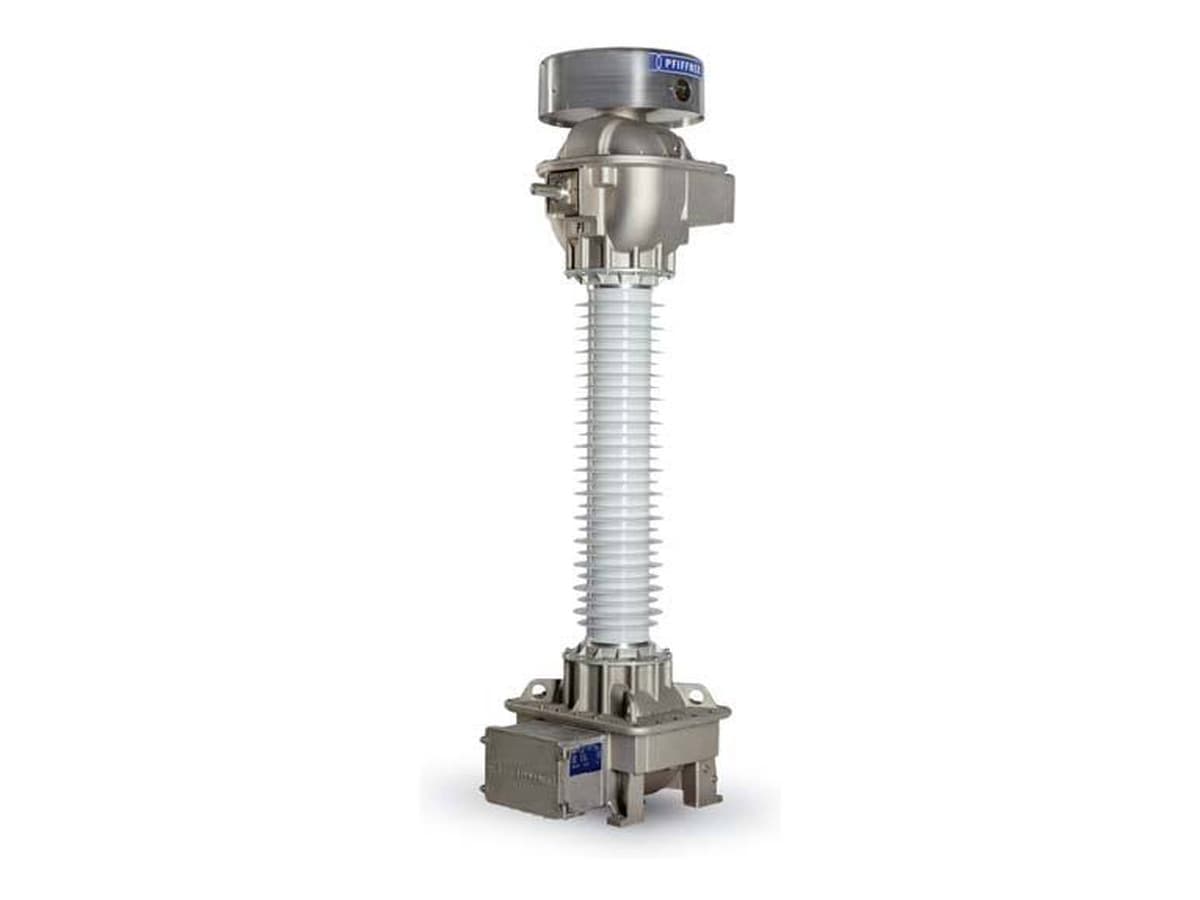
- Instrument TransformersCTs, VTs, CVTs and RC dividers for precise measurement and protection.View details
- Surge ArrestersOvervoltage protection for equipment and networks.View details